Steve
And the power of fiction

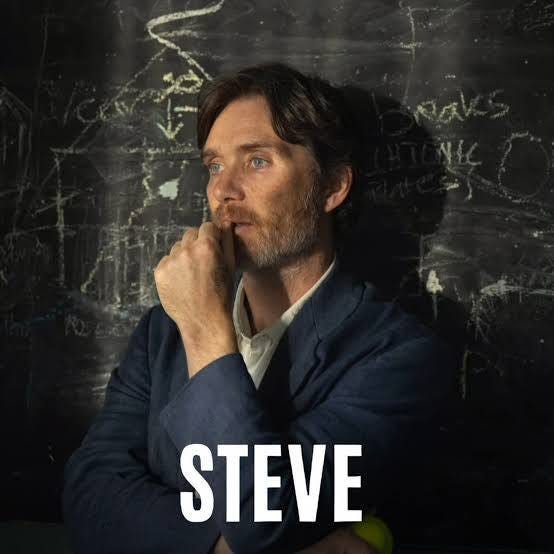
I’ve just finished my Creative Writing PhD – seven years in the mulling – and one of the things that I’ve been mulling, is the boundary between fiction and non-fiction. What’s the difference and why does it matter?
As I so often find, a very good answer to this question popped up when I wasn’t thinking about it at all, but had instead settled down to watch a film: Steve, which stars Cillian Murphy and Tracey Ullman and has recently come out on Netflix. It’s a fictional film, based on Max Porter’s novel Shy and set in a ‘reform school’ for boys in the 1990s where staff and students are barely coping. One of the many clever details is that we see the school whilst a short documentary film is being made, so the question of whether the subject matter is best suited to fiction or documentary is immediately implicit, and at the start of the film I found myself wondering why it wasn’t a documentary. Why were we being invited to worry about fictional characters rather than real people? The issues seemed so current and urgent, my first thought was that we should be attending to how we can best support troubled young men right now. I worried that the fictional lens risked letting us off the hook of engagement.
And then there came a moment when Shy, after whom the novel, which I haven’t read, is apparently named, is on the phone to his mother. The conversation they have is devastating to him and would have been too intrusive to include in a documentary. It’s a pivotal episode, and it pivoted me into appreciating the fictionality of the film, not just because it enabled an intimacy that documentary would draw back from, but because of the very different emotional impacts that documentary and fiction can have.
If I’d watched an upsetting documentary about disturbed young men in care, my response would have been political – something needs to be done – and othering, albeit sympathetic othering: these poor young men, these poor families, these poor teachers, etc. Without that leap-off-the-sofa-and-do-something response available, because its fiction and there’s no one to complain to, nothing, exactly or immediately, to change – I felt how powerfully fiction can push us back inside ourselves. As the option of an angry and active reaction dissolves, we are left with the more uncomfortable feelings of pain and uncertainty. Instead of ‘this shouldn’t be allowed to happen’, ‘how would I cope with this?’ The difficulties enters us without the comfort of a righteousness response.
Another thing I often find, is that I have a thought and then realise that Virginia Woolf had it about a hundred years ago. Writing about the Edwardian novels of the generation before her, Woolf exclaims:
what odd books they are! Sometimes I wonder if we are right to call them books at all. For they leave one with so strange a feeling of incompleteness and dissatisfaction. In order to complete them it seems necessary to do something—to join a society, or, more
desperately, to write a cheque. That done, the restlessness is laid, the book finished; it can be put upon the shelf, and need never be read again. But with the work of other novelists it is different. Tristram Shandy or Pride and Prejudice is complete in itself; it is self-contained; it leaves one with no desire to do anything, except indeed to read the book again, and to understand it better. (Mr Bennett and Mrs Brown, 1924)
The profounder reaction, which leaves one with ‘no desire to do anything’, is a shift in consciousness which is what really effects change.
I recommend Steve.